New e-learning course for Scottish care workers
We created cyber security training that actually works for Scotland’s care workforce.
Cyber security doesn’t always connect with the people it’s designed for. It can feel too technical, too generic, or just not relevant to the day-to-day reality of the job.
So, when we were asked by the Scottish Social Services Council (SSSC) to develop a new e-learning resource, we knew it had to be relevant for care workers and managers across Scotland.
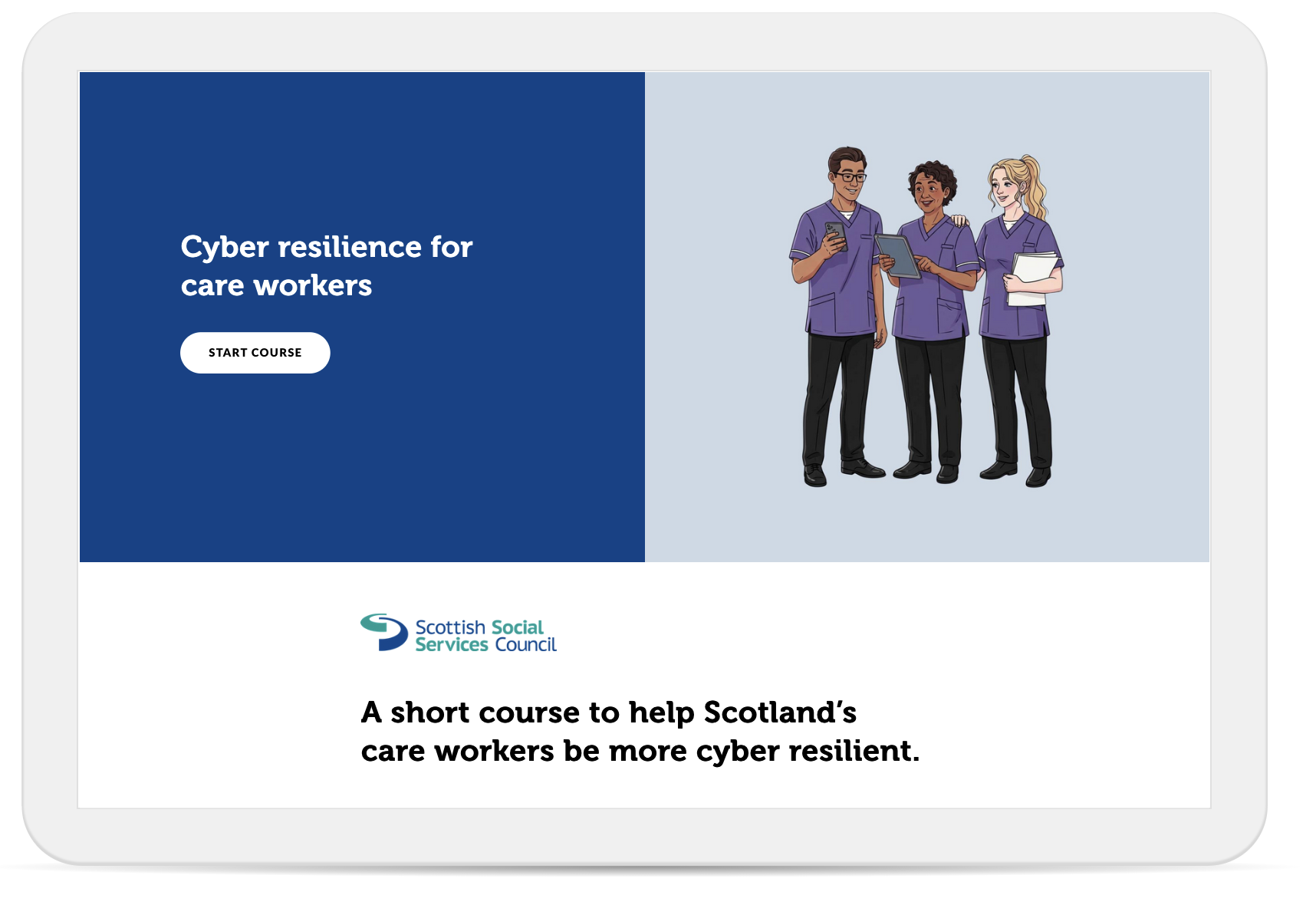
We started by thinking about what the job actually looks like.
We met with the managers at SSSC to work out the most important cyber threats relevant to care workers. They know the workers best and what’s happening across Scotland. This meant we could design the course around their needs and not just a typical off-the-shelf cyber security e-learning module.
For example, we know that they deal with lots of sensitive client information (like medical records) as well as business sensitive information (like rotas and staffing). We knew it was important to show them how they could store and share these types of files in a secure way.
One of the biggest threats to the care sector comes from phishing scams. So this e-learning shows them how to spot these types of threats.
What does a phishing attempt look like? Who should I report it to? How do you keep your accounts secure or share information safely? These are questions we built the learning around. We even used examples of phishing emails that had been seen in care settings, so it would reflect what they might encounter in real life.
It looks like them
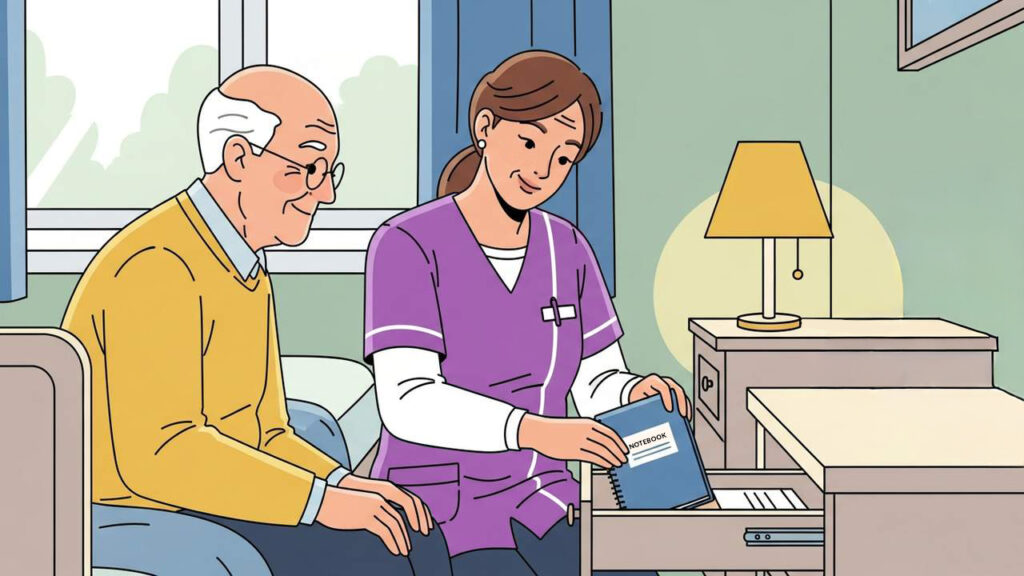
We worked with a graphic designer (Dog and Fox Design) to create illustrations that reflect real care environments, showing care workers in uniform and managers in office settings.
We showed them in typical work clothing, including tunics, polo shirts, and office wear.
This helps learners recognise that the training is for them – it’s not a generic course designed for someone else. When people see themselves in training, they’re more likely to engage with it, trust it, and act on it.
Built around real situations
We designed scenarios based on real-life examples of how care workers and managers in Scotland have encountered cyber threats. This gets learners thinking about what they’d do in similar situations.
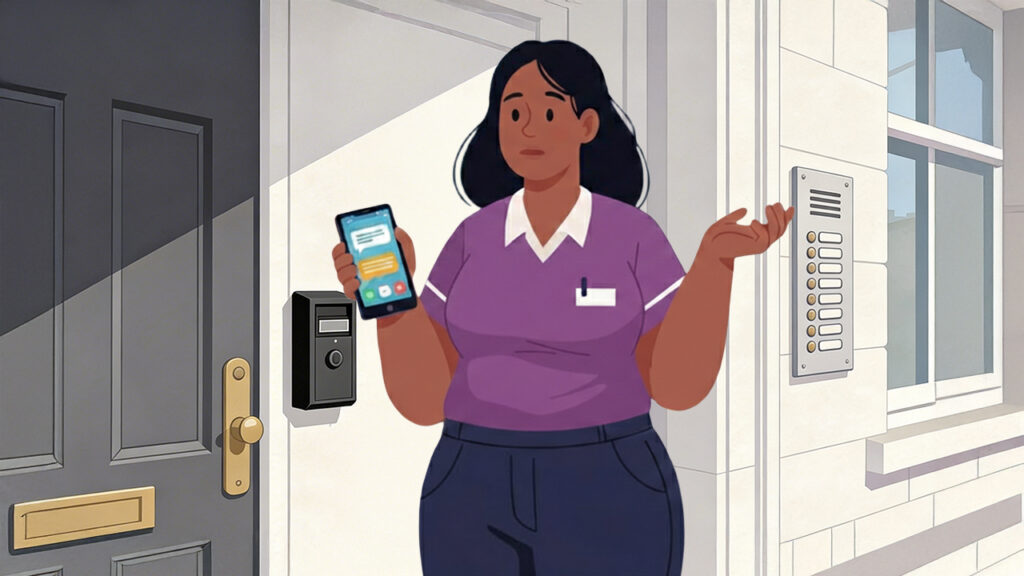
In the training, we look at some of the safest ways to share information with your colleagues and where it can go wrong. For example, choosing the safest way for Lukas to share an updated care plan containing sensitive information, or how Adele, an in-home carer, should securely access important information like a lock-box code.
This way, they can take what they are learning and put it into practice in real life.
Flexible learning
Care workers are busy, their focus is on the people they support. The training was designed to fit around that.
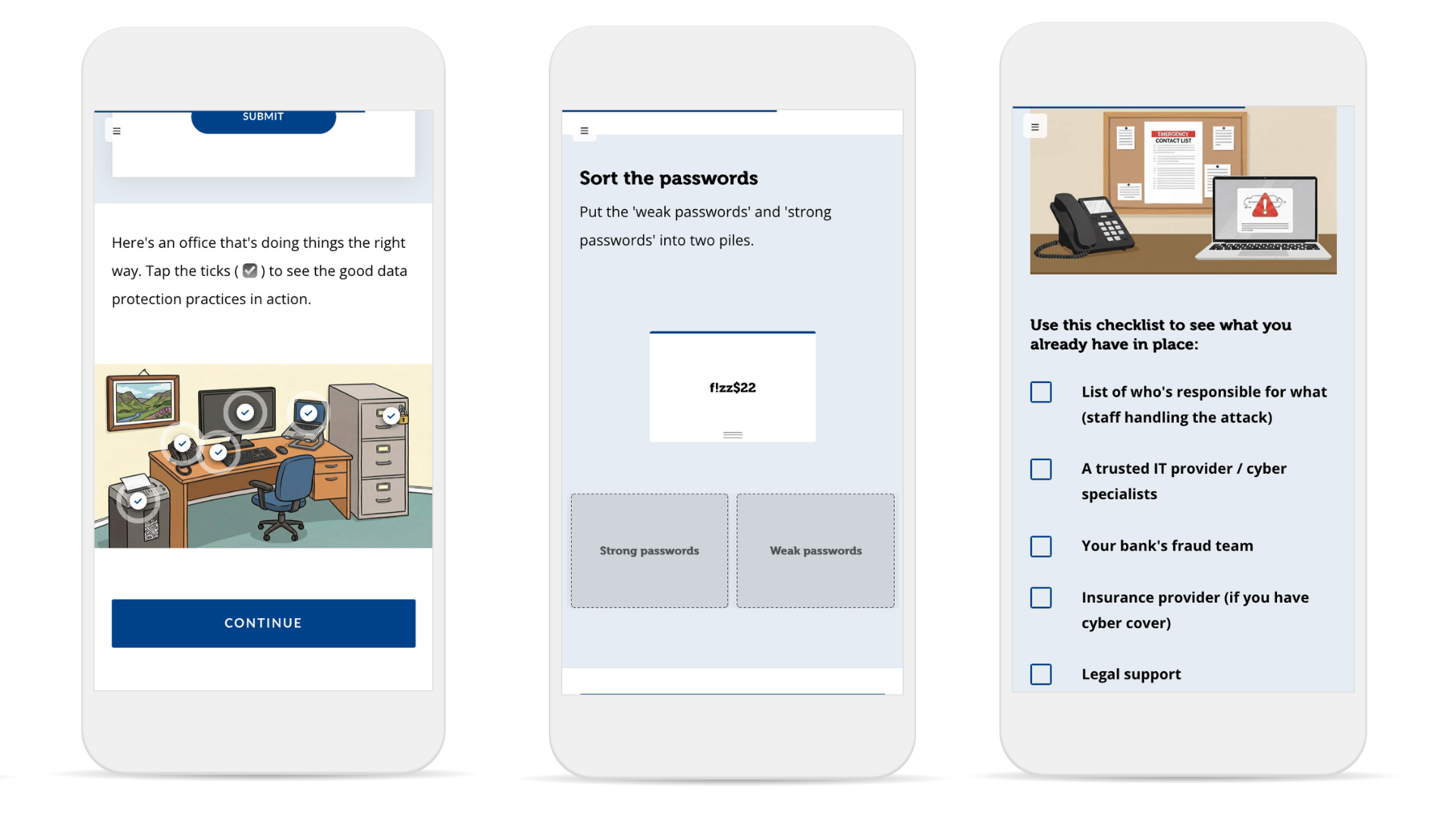
It’s broken into short, manageable sections that fit around busy shifts. We included interactive elements like short activities, videos, and practical checklists to keep the training engaging and useful for the learners, while making sure everything felt relevant to real care settings.
Everything is written in plain English with no unnecessary jargon.
We’re excited for this resource to be used by thousands of workers across Scotland, helping build their confidence and improve cyber awareness.
Kirstie
Digital Skills Education
We can do this for you
Do you want e-learning that actually works for your staff?
We can create tailored e-learning for your workers. We design training that reflects your roles and uses relevant examples.
Whether you need a small set of modules on cyber security or data protection to slot into your existing training, or creating a new course, we’d love to help.
Get in touch if you’d like to have a chat.